[Job Interview] CTO Young-won Kim – EP 2. From Researcher to Leader — How CTO Kim Young-won works
EP 2. From Researcher to Leader — How CTO Young Won Kim Works
Q. How do you define the role of CTO?
I think there are two types of CTO.
The first is the person who sets the direction of technology, and the second is the person who makes technology work in reality.
It’s not enough to come up with ideas for good technology.
That technology becomes a product, becomes a business, and leads to execution
I think it’s CTO’s role to make the results come out.
CTO as a researcher is a person who digs into the essence of technology,
CTO as a leader is about where the team should focus,
I’m the one who clearly suggests the priorities of which problem to solve first.
It’s especially difficult for startups to separate the two.
When you make a technical judgment, you’re not sure if this is a real customer problem,
We have to see if we really have to do it at this timing.
You’re responsible for the level of technology, and you’re going in the right direction
It’s the role of the CTO that I think makes it move together.
Q. What’s the biggest difference from when you were at the lab?
When I was in the lab, my goal was to become the person I knew the best in the world.
For example, if you take control of a particular system, when it comes to that controlNo matter where I went, I had to be the person I knew the most.
The CTO is the opposite.
You have to have a view that makes the whole thing move organically,
It’s not that I’m the best at one, but it’s the role of supporting each researcher to become the person who knows best in his field.
I can’t complete something by myself.
If there is a bottleneck in each field, it solves it quickly, eliminates things that need to be released outside of technology,
I think it’s CTO that lays the groundwork so that they can focus only on research in their part.
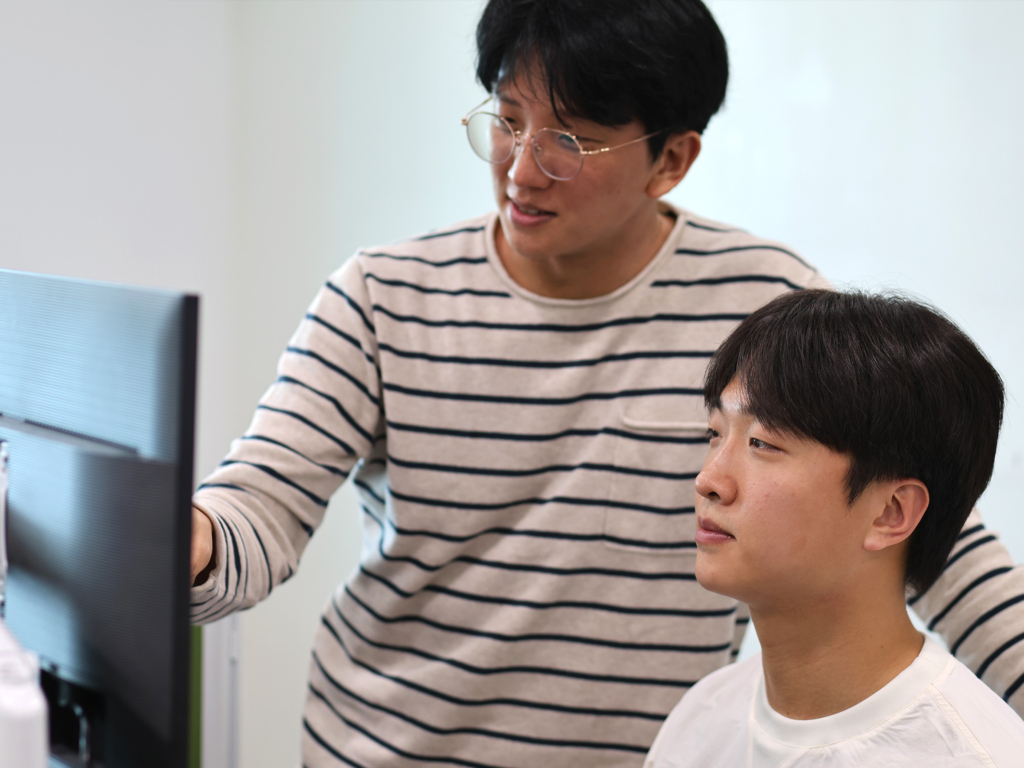
Q. How is CTO’s day going?
When I get to work, I check my entire condition first.
Look at the progress of each team, see if there were any issues,
I spend time organizing what I can release or what I need to change my priorities.
The reason I do this first is, It’s because it’s not fun to be honest.
If you start with research and development, that’s all you have to do.
But as I said earlier, for CTO, rather than me being good at research and developmentIt’s more important to make the team work well.
It’s important, but it’s not fun, so take care of it first,And then you look at the algorithm, you look at the data,
Let’s move on to thinking about the direction of the product.
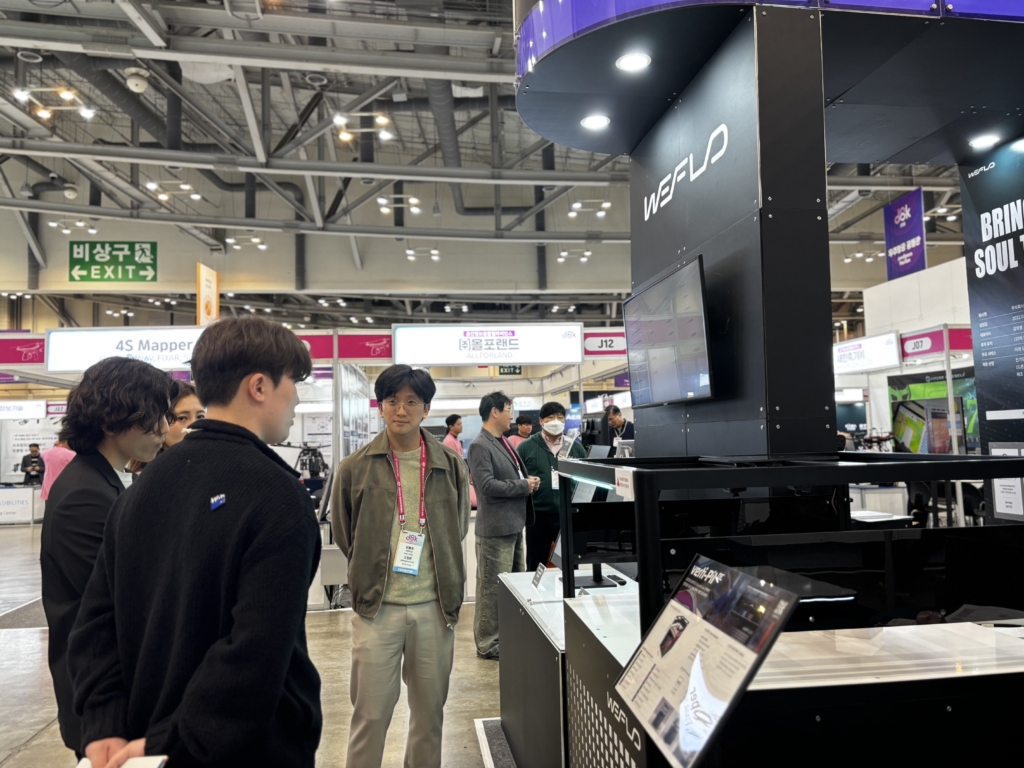
It’s completely different when there’s an outside meeting.
When I was in the lab, most of them were internal meetings,
There are a lot of customer, collaborative partners, and investment company meetings here, so the rhythm is quite different on a daily basis.
Q. How is the WEFLO technical team organized?
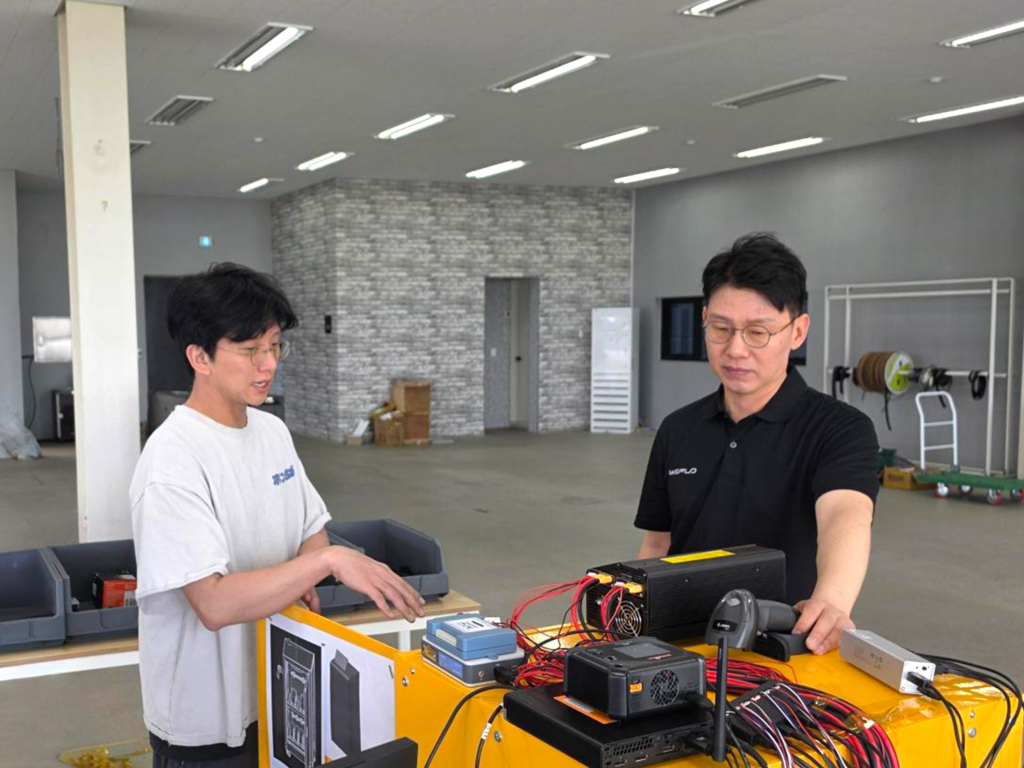
WEFLO’s technology team is veryIt is divided into three teams: AI team, product development team 1, and product development team 2.
product developmentTeam 1 is software and Team 2 is hardware-oriented.
Of course, it is not completely separated, and there is a lot of collaboration between teams in areas that are linked to products.
The AI team is mainly in charge of algorithms, and other teams also work together when they need algorithms linked to products.
Our technology is designed to provide hardware, such as sensorsSince it is an area where AI software must be closely linked,
Organic communication between teams is especially important.
Q. What is the most important thing in leading the technicalteam?
It might sound funny, I think small talk is the most important thing.
To put it in a good way, it’s about the other person.
You said earlier that you need to be the best in each field,
If you want to know your field best, you need to know your surrounding field as well.
It’s a software that runs hardware, and you can’t help but know the hardware,
It’s diagnosed with AI, but there’s no way you don’t know the sensor.
We’re interested in each other, When you share and discuss your own, you’ll find something you haven’t seen alone.
It seems like you’re helping others, but you’re actually doing your job.
If this doesn’t work, it becomes “I did everything, but I can’t because of you.”
But actually, it was only mine, and I didn’t even think about what the other person should do.
There’s a limit to this organic connection if it’s only a hard request.
When we chat, we naturally talk about technology, and that becomes a discussion and an idea.
So I think small talk is the most important thing.
Q. What kind of efforts do you make to create such a culture?
The WEFLO technical teamThe culture of “Coffee Time”
It’s a time where we naturally get together and talk,
Right now, the team is physically dispersed, so it’s difficult for all teams to do it.
So I made a separate cultural rule for the development team.
Especially, it was difficult to communicate because the location was far away,
Hardware and software had to work together, but there was a lack of interaction.
I came out thinking about how to solve it, but I think it’s getting better because it’s working little by little now.
Q. What do you want from researchers at WEFLO?
I want you to be self-directed.
It may seem easy, but it’s really hard, Often, when I do government tasks, I just meet the requirements and finish them.
Most of the time, it’s because they don’t sympathize with the research.
If you feel that research is sympathetic and really necessary, you shouldn’t.
So I’m paying attention to two things.
One is trying not to schedule things tight.
If you’re too busy, you just meet the standard and end it.
I think we can only think about it if we can afford it.
The other is the presentation of the vision.
I share “I’m doing this for some reason” to make them sympathize.
Q. What was the most rewarding project so far?
There was a project where the technology was definitely proven numerically.
It is a QC equipment that can perform automatic quality inspection on the drone production line, which was more than just a result.
When I actually created a concept that seemed possible at the research stage, I encountered a lot of variables,
As the industry is not yet mature, there were moments when I wondered, “Is this really proven?”
It would have been clear if I tried 100,000 units, but the reality is that it’s not.
by the wayThe problem we were solving in the QC project was a practical problem,
It has been solved for sure, and it has even been verified with abundant data in the real environment.
In particular, the customer company reduced the amount a lot thanks to it, and it was actually profitable,
It gave me a lot of confidence to hear that.
Algorithms from Key Check Items, We pioneered all the automation ourselves,
The team also came up with an idea to increase the speed needed for mass production.
Beyond technological achievement, it’s become the norm in the immature drone industry
It was a project that felt the possibility of contributing to the industry itself.
Q. On the contrary, the hardest experience was?
I thought the direction was right, but it’s hard to say that it’s not the scene.
There are so many things that can’t be done in the lab.
Then, not only technical problems but also psychological burdens increase.
In the process of commercialization, trade-offs between completeness and schedule are also difficult.
When I went to graduate school, I just had to change myself and match the degree of completion,
Here, many people have to raise the level of completion together, and at the same time, the timeline is set.
I can’t just look at one side and push.
In that situation, if the family that was established in the laboratory collapses, a lot of things get broken.
The important thing is to structure it quickly without hiding such a failure.
It’s not about staying in “failed,” you have to quickly identify what was the assumption and what was true and move on to the next step.
Finding the responsibility is not helpful, and it is more important to share transparently and learn from failure to reduce the same mistakes next time.
Q. What’s the charm of working in WEFLO?
It’s a sense of speed.
The developments I made in Hanwha are missiles, The projectiles are large and expensive.
It took two to three years to get to the first flight test by turning the simulation around a lot.
However, when you come to a start-up, if you agree that this is necessary, you can make it right away and apply it right away.
In particular, WEFLO’s charm is that what we’ve studied can be applied almost immediately to the field.
You can apply what we have studied at industrial sites and production sites, verify with data, come out as products, and see the on-site response right away.
I don’t think there are many places that have this speed despite being a B2B.
And you can choose your direction regardless of whether you’re a junior or a senior.
In large companies, you can experience it in advance here, which can only be done in 10 years.
Of course, it may not suit people who want to do only the things that are set.
It’s a little disappointing environment for start-ups to do only the things that have been decided.
Q. What do you want to look like in 10 years?
Whether it’s a droneWhether it’s AAM, I think there will be an era where mobility moves with more data and higher autonomy.
In the end, what people do will be almost gone. That’s how important a reliable diagnosis system becomes.
WEFLO is at the center of the change, I hope it becomes a company that makes technology used in real industries.
It would be perfect if it could be called the company that has solved the most difficult problems in this field.
Personally, it’s similar. Rather than someone who knows a lot of skills,
I hope you will be remembered as an engineer who defined important and difficult problems well, dug in to the end and created realistic solutions.
If WEFLO becomes such a company in 10 years, I don’t think there will be any regrets.