[Job Interview] Ko Jeong-wan, COO – EP 1. From Harvard Research Institute to becoming Director of Drone Company Operations
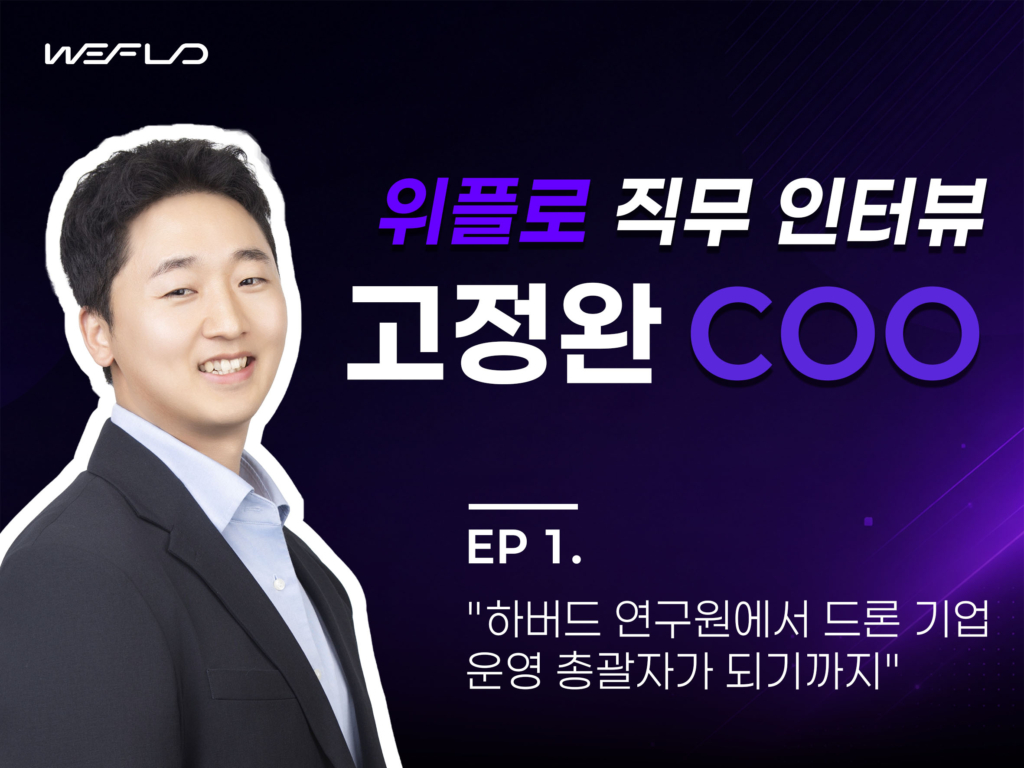
EP 1. From Harvard Researcher to becoming Director of Operations of Drone Company
Q. Please introduce yourself.
Hello, I’m Jeongwan Koh, co-founder of WEFLO and in charge of operations as COO.
When it comes to operations, it’s a role that covers almost everything a company needs to maintain, grow, and sustain.
In terms of growth, there are things like business strategies and investments,
In terms of operation, we are in charge of things such as personnel, finance, and internal systems, which are management support areas.
The background is technology, but management and strategy are more interested than research and development, so I started in this direction.
Q. How was your journey before joining WEFLO?
I majored in electrical and electronics from bachelor’s to doctor’s degree because I thought the most diverse field of electrical and electronics can do after graduation.
After completing my doctorate at KAIST, I was a researcher for about two years, and then I was at Harvard for about two years.
Originally, I went to the U.S. to go to Big Tech.
But about two years later, my worries began.
While at Harvard, I’ve done a lot of projects with big tech companies like Google and NVIDIA.
To be honest, I thought that big tech’s job was to solve the given problem well.
It wasn’t as fun as I thought maybe because the problem was fixed.
I thought it would be more fun to find a good problem than to solve a problem.
And actually, I’ve been interested in starting a business before.
If you look at KAIST’s Ph.D. degree, you can start a business with a minor.
I’ve been interested in you all the time.
At that time, two proposals came in almost at the same time.
One was that a Harvard professor suggested that we start a business in medical AI as a co-founder,
The other is that the current CEO in Korea proposed a start-up as a copounder.
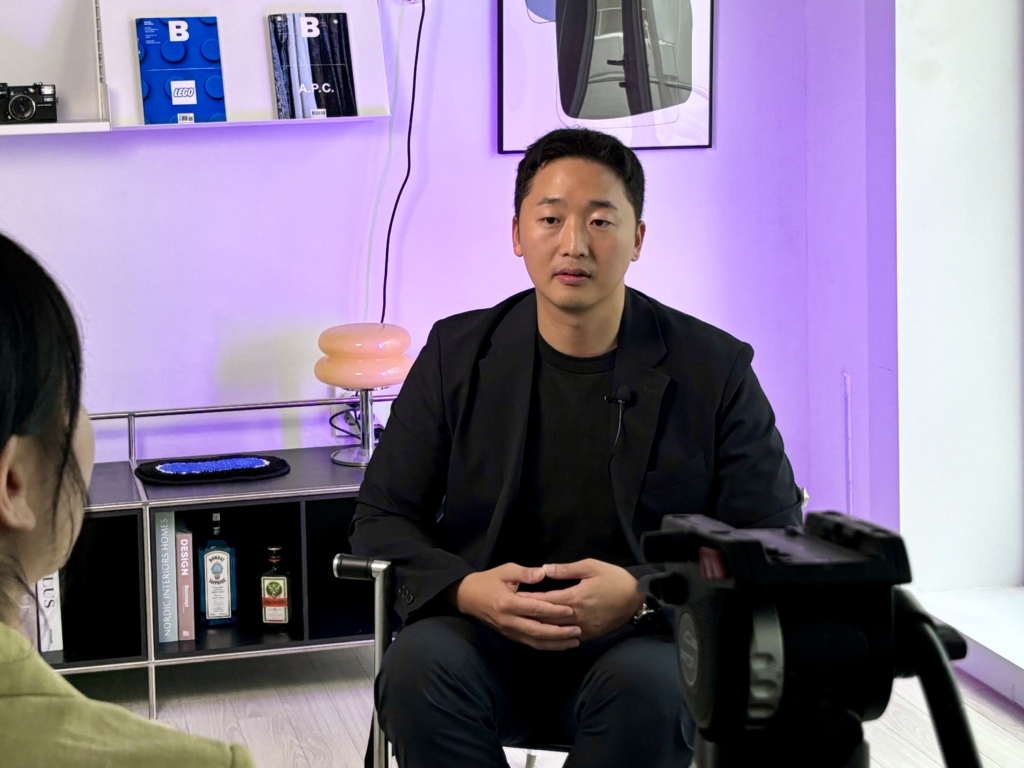
Q. Why did you choose WEFLO from two options?
I thought WEFLO’s business items were unique and attractive.
AI solutions were already overflowing at the time, but what I thought was the key was the data.
WEFLO has sensing technology that allows you to collect high-quality data directly.
It’s like sound, vibration, and other information that humans can understand with their naked eyes and senses
It can be collected quantitatively and accurately through the sensor we developed.
It’s not just about collecting, it’s about using AI-based algorithms
It’s the milestone of WEFLO to determine whether there is an abnormality and to make predictive maintenance possible
I saw that if I could secure good data at the front end, the AI at the back could follow,
I decided that I would be competitive because I have strengths in the front end.
Q. How is COO’s day going?
If there is a difference from other C-levels as an operations general manager,
There are many different stakeholders who need to communicate.
If you look at it broadly, there are several categories.
First, shareholder response. Quarterly reporting, shareholders’ meetings, IR events, and so on go back to routine.
Second, it is a response to issues in management support. Regular reports and decisions related to financial conditions, expenses, and personnel and recruitment are carried out.
Third, it is to manage the progress of government tasks and provide new support,
Fourth, it is a strategic planning job that supports the company’s growth direction or major decision-making.
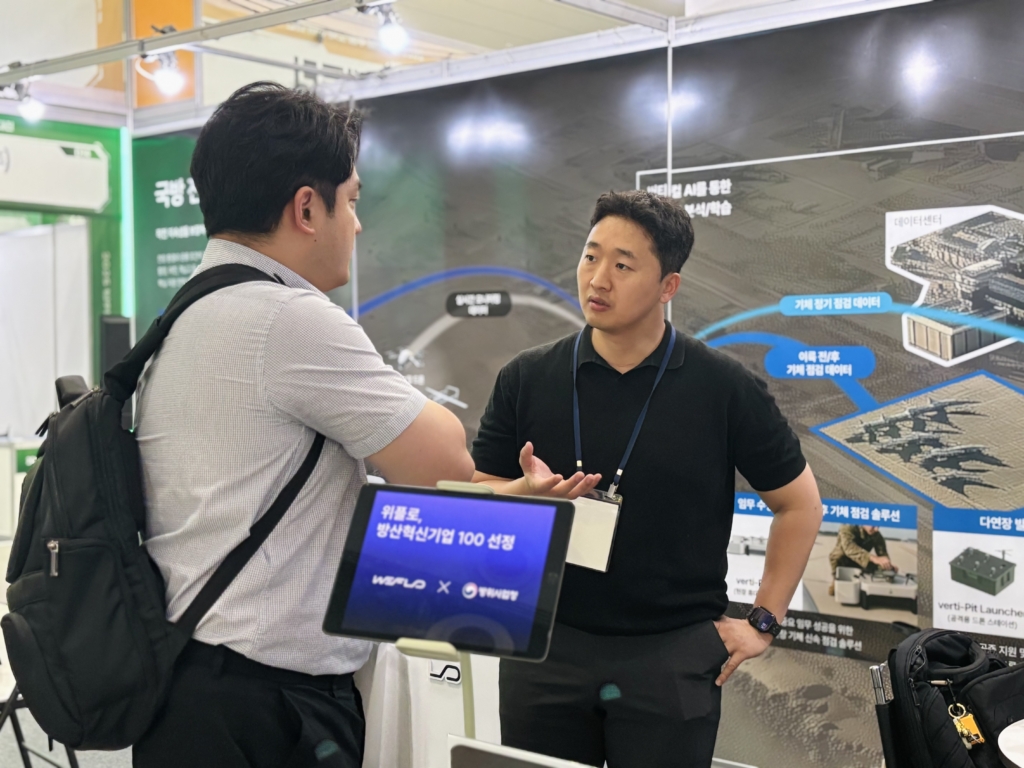
Especially these days, I’m in charge of responding to the defense sector, especially the troops and agencies
There is also a lot of time to visit the company or communicate with the unit.
Q. What is your most important growth strategy as a COO?
I think this year is a really important moment for WEFLO.
It’s a time when we’re on the border of growth, trying to attract Series A investment and struggling in many ways to shape our organization and business.
There are more work, more people, and various issues are popping up at the same time.
In the end, I think what we need now is the growth of the organization.
And for an organization to grow, it needs to have a well-made system.
If we don’t have the human resources, the organizational culture, the agreed rules
People go in and out, but they keep a similar scale as they repeat themselves.
So from this year on, we are focusing on making the inside harder.
You set specific goals, create an organizational culture, try and fix them.
The key is to make it possible for good people to come in and have fun working and maintain the firmness of the organization.
Q. What are you thinking about in terms of business strategy?
It makes the company’s growth direction more specific from vague.
What products do you launch, what business do you run, every three or five years,
I’m trying to draw more clearly what type of company it should be.
Until now, I was in the stage of sowing seeds while trying various products.
Some have positive feedback, and others take longer.
Now it’s time to take out what you have to take out and go out sharper.
I think the strategy is to be good at that choice.
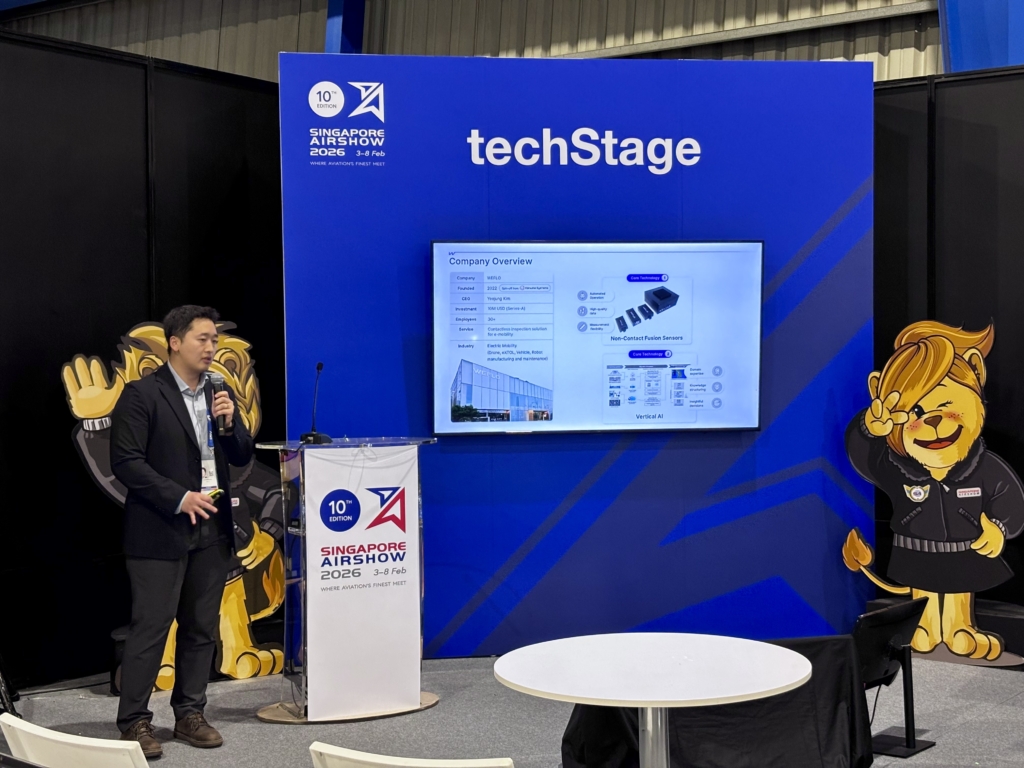
Q. Throughout the company this yearYou introduced KPI, and I’m curious about the background.
As part of the aforementioned ‘establishing a system for organizational growth’, KPI was introduced across the board.
I don’t really know what the methodological answer is yet.
So I started with the most intuitive and easy-to-do KPI.
We approached it as a tool and methodology to direct, share, and move toward goals.
The perspective of motivation and direction sharing is greater than the perspective of evaluating.
In the next episode, we’ll show you the culture and talent of WEFLO, the most rewarding experiences and failures, and the vision of 10 years from now
— We talk about the ‘growth equation’ of Jeongwan Koh COO.